Sixty Seconds to Genius: How YouTube Shorts Is Accidentally Reinventing the Music Video
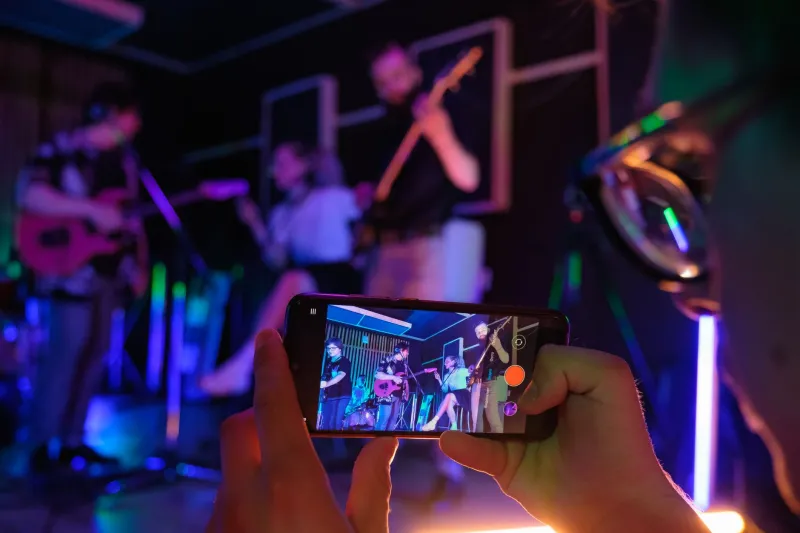
There's a cruel irony buried inside YouTube Shorts. The platform was built as a TikTok clone — a corporate hedge, a defensive play, a product born from boardroom anxiety rather than artistic vision. And yet, somewhere between the cooking tutorials and the fail compilations, something genuinely interesting started happening to music video culture.
Musicians and visual artists — mostly working without budgets, labels, or a publicist in sight — figured out that the 60-second constraint wasn't a cage. It was a dare.
The Death of the Three-Minute Formula
For decades, the music video followed a loose but reliable grammar. Establish the artist. Build a visual world. Match the energy of the chorus. Throw in a concept if the budget allowed. Run it out to three or four minutes and ship it to MTV, then YouTube, then Vevo.
Shorts broke that entirely. You don't get a slow build. You don't get a second chance at a first impression. You get one hook, one visual idea, and maybe thirty frames before a viewer's thumb decides your fate.
What's fascinating is how many underground artists responded to that pressure not by dumbing things down, but by sharpening everything to a point. Bedroom producers who couldn't afford a camera crew started shooting on iPhones in single takes. DIY punk acts started filming in their kitchens with whatever light was available. Lo-fi beat makers started pairing their tracks with hand-drawn animation loops that loop perfectly inside the format.
The result looks nothing like a traditional music video. It looks like something new.
Constraint as Creative Engine
This isn't a new phenomenon in art history — limitations have always forced innovation. The 7-inch single gave punk its urgency. The three-act structure gave screenwriters a scaffold to rebel against. The Dogme 95 movement in film deliberately stripped away production tools to force directors back to raw storytelling.
Shorts is doing something similar, except it's happening accidentally, at scale, and mostly to people who never took a film theory class.
Take the wave of artists using a single uncut shot as their entire visual strategy. No editing, no effects — just a performer in a space, reacting to their own track in real time. It sounds lazy until you watch one that lands. There's an intimacy to it that a polished label-funded video simply cannot manufacture.
Other creators are leaning into visual abstraction in ways that would never survive a label's notes session. Glitchy footage. Deliberate grain. Split-second cuts that feel more like a sensory experience than a narrative. One Brooklyn-based producer who goes by Mossfield has been releasing Shorts that pair original ambient tracks with found footage from public domain films, creating something that sits between music video and experimental cinema — all in under a minute.
The Underground Ecosystem Nobody's Covering
The creators thriving in this space rarely show up in music media coverage. They're not on the radar of Pitchfork or Rolling Stone. Their subscriber counts are modest. But their comment sections tell a different story — tight-knit, loyal, genuinely engaged in a way that mainstream viral content almost never produces.
A guitarist named Sera Voss, based out of Albuquerque, has been posting Shorts that pair original fingerpicking compositions with slow-motion footage of everyday objects — water, smoke, cracked pavement. Nothing about it should work as a music video. All of it does. Her audience isn't massive, but they show up for every upload and they share with the kind of enthusiasm you usually only see in niche subreddit communities.
That loyalty is the real story here. The algorithm may have created the conditions, but the artists are building something that outlasts any single upload.
Why This Matters for Visual Storytelling
From a pure film perspective, what's happening in the Shorts music video space is worth paying attention to. These creators are developing a visual language in real time — one built around compression, immediacy, and emotional efficiency. Every frame has to carry weight. Every second has to justify itself.
Those are skills that translate. Directors who cut their teeth on short-form visual storytelling tend to develop an instinct for economy that longer-form work often lacks. The best indie films often feel tight in ways that studio productions don't, and a lot of that tightness comes from filmmakers who learned to do more with less.
Shorts is, without meaning to, running a continuous masterclass in exactly that.
Before the Algorithm Catches Up
Here's the catch, and there's always a catch. YouTube's recommendation engine is still figuring out what to do with genuinely experimental content. Right now, the chaos works in underground artists' favor — the algorithm is blunt enough that a weird, beautiful 45-second visual experiment can land next to a mainstream pop clip and find an audience it was never meant to reach.
That window won't stay open forever. As Shorts matures, as advertisers demand more predictability, as the platform inevitably optimizes toward what performs rather than what surprises — the experimental stuff will get pushed to the margins.
But the work will exist. And the artists who built their visual instincts inside this particular constraint will carry those instincts forward into whatever format comes next.
For now, if you're not spending at least a little time scrolling past the algorithm's obvious suggestions and hunting for the weird stuff — the single-take performances, the found footage collages, the abstract loops — you're missing one of the more quietly exciting moments in DIY visual art.
Sixty seconds. No budget. No rules. Turns out that's enough.